Energy Learning Network

Through the Energy Learning Network, Future Caucus connects young lawmakers across state and party lines to modernize energy production, grid infrastructure, and environmental protections that improve Americans’ quality of life. These efforts illuminate the overarching post-partisan commitment to building a resilient and vibrant America, prepared to lead the world with innovative and daring solutions to changing energy needs and a new generation of conservation.
The Energy Learning Network is organized for members to share their experiences, expertise, and approaches to initiatives appropriate for them in their state. Participation does not imply support of all approaches to energy and the environment.
Meet the Energy Learning Network
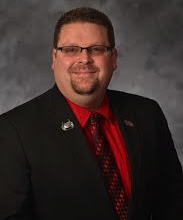





Rep. Jillian Gilchrest

Rep. Chris Lee

Rep. Joe Mitchell

Rep. Quentin Williams

Rep. Karin Power

Rep. Erin Zwiener
Member Spotlight: Rep. Gilchrest

Connecticut Rep. Jillian Gilchrest joined Future Caucus at the Energy Learning Network forum in Denver, in December 2019. A result of her engagement with the Network, she was appointed to the CT House Energy and Technology Committee! She looks forward to continuing to advance bipartisan solutions to issues impacting the sustainability and future for everyone in Connecticut. Read the full blog post on her journey here.

“By the time I left Denver, I was equipped with the necessary resources and messaging to confidently discuss clean energy and microgrid technologies for my state.”
Recent Events
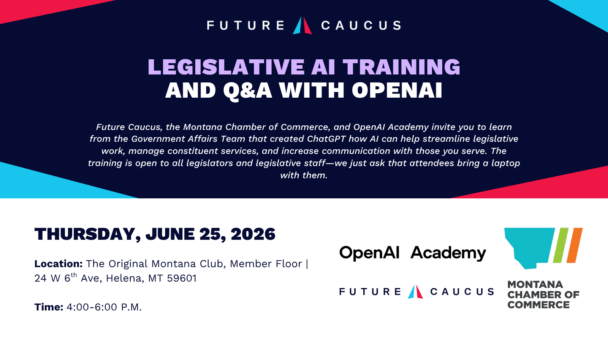
Montana Legislative Ai Training and Q&a
Event date: June 25, 2026
Montana Legislative AI Training <span class="dewidow">and Q&A</span>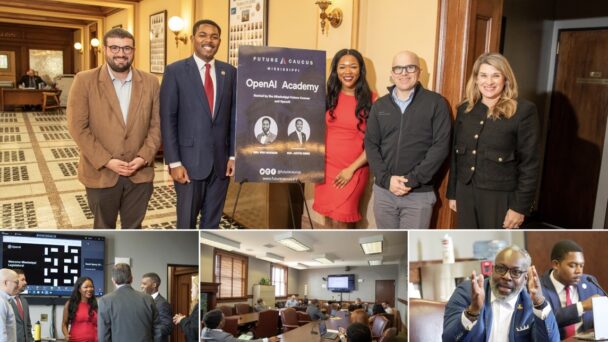
Mississippi Future Caucus Training With openai Academy
Event date: January 07, 2026
Mississippi Future Caucus Training with <span class="dewidow">OpenAI Academy</span>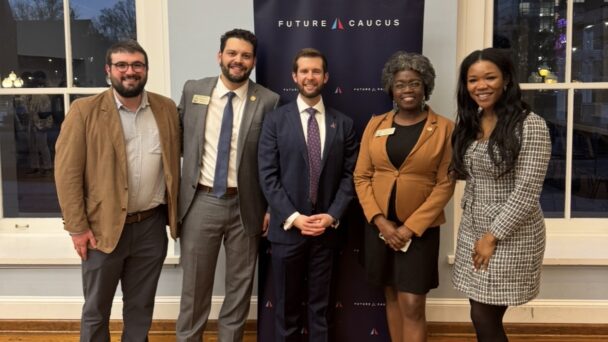
Tiktok Legislative Training & Reception
Event date: March 04, 2026
TikTok Legislative Training <span class="dewidow">& Reception</span>In the News

Younger Candidates Are Finding It Tough To Break into Congress
October 2, 2026
Younger candidates are finding it tough to break <span class="dewidow">into Congress</span>
The Problem With “fighting Polarization” And A Better Path to Unity
September 16, 2026
The Problem with “Fighting Polarization” and a Better Path <span class="dewidow">to Unity</span>
The Politicians Who Can Fix America’s Polarization Problem will Win
August 25, 2026
The Politicians Who Can Fix America’s Polarization Problem <span class="dewidow">Will Win</span>Legislator Resources
The Renewable Energy Economic Benefits Of Microgrids
New report conducted by Guidehouse Insights and commissioned by Civil Society Institute, Future Caucus and RMI shows lasting impact on local economies and job growth from investing in renewable energy, battery storage and controls for microgrids.
Boosting Resiliency And Onboarding Innovation
Our national reckoning with the impacts of a changing climate grows more important by the day. Fortunately, the avenues to address these challenges are increasingly tangible and new technologies continue to expand the options available to policymakers. In the face of evolving threats, lawmakers can build stronger, more prosperous communities by prioritizing common sense solutions that bolster resiliency and capitalize on innovation.
State lawmakers can facilitate the development and implementation of microgrids through several policy avenues, most notably by removing barriers to microgrid construction and coordinating grid integration.




Join 2,000+ BIPARTISAN LEADERS NATIONWIDE
Be a part of a network of lawmakers committed to governing effectively, passing more representative public policy, and increasing public trust in democracy.