Turning Good Stories Into Long-Term Wins
December 4, 2025
How Nonprofits Can Build Storytelling Systems That Last
By Elizabeth Rosen
Two months ago, Reed Howard and I had the chance to run a workshop at ComNet—the annual gathering of The Communications Network—on something we obsess over here at Future Caucus: turning good stories into long-term wins. Once the headline slides off the front page or the event recap video stops feeling fresh, how do you make sure the success behind it keeps working for your mission?
Nonprofit comms teams need not only good content, but a strategy to make that content work harder for them over time. Here is the framework we shared with other practitioners, adapted for our Young Lawmakers Storybank but applicable to a wide range of organization sizes, causes, and life stages:
Stories live longer when they’re collected with purpose.
Anyone can hit “record,” but durable storytelling starts long before an interview—with being intentional about why you’re collecting this story and why from this person.
At Future Caucus, our ethos—listen first, say “we,” build trust, empower others, break barriers, and innovate freely—guides everything. In a space overflowing with compelling stories (thank you, Future Caucus lawmakers!), keeping that ethos front and center helps ensure the narratives we collect stay evergreen, rooted in our mission and values. It shapes who we talk to, which themes we highlight, and what we bookmark for later use.
Plan ahead to take advantage of key moments.
Most nonprofits see their people in person far less often than they’d like. So when you do have that chance, make it count.
At events and convenings, we pull lawmakers and partners aside for in-depth, on-camera interviews, but it’s never a spontaneous “let’s grab someone.” About a month before the event, we review the attendee list, targeting individuals who fit cross-cutting themes. Could we interview three or four lawmakers from different states about their perspectives on mental health, wetland conservation, or redistricting? What about pairs of lawmakers who are both in the superminority or supermajority, but in different states and parties?
And if you have the freedom to experiment, take it. Some of our best content came from thinking outside the box, pairing lawmakers who both played football before running for office or whose families both have a history in the military.
Two to three weeks out, we send interview invitations through Calendly (or another scheduling tool), letting participants choose slots that don’t conflict with conference programming, legislative meetings, or lunch plans. Including phone numbers in the sign-up ensures we can ping them if timing gets tight—small prep, big payoff.
Ask deliberate questions that build connection.
We always record interviews, whether it’s a full video setup, a Zoom recording, or a trusty smartphone or dictaphone (just in case). But the real value extends far beyond the recording itself—it’s in shaping the conversation with thoughtful questions.
Good interviewing draws out what’s unique about your subject: their worldview, problem-solving approach, personal influences, lifestyle constraints, and candid reflections on lessons learned. Have a “North Star” to guide the narrative, but be ready to follow unexpected threads.
And it doesn’t end when the interview does. One lesson I’ve learned at Future Caucus: spend 30 focused minutes with someone, make eye contact, ask sincere questions about their goals and struggles, and it often ends with, “Wait… did we just become best friends?”
You don’t have to actually become best friends, but don’t let that spark fizzle out. Long-tail storytelling depends on long-tail relationships. When people feel respected, seen, and safe, you get richer stories—and better access—over time.
Catalog like your future self depends on it.
…because they do. After every interview, we rewatch, re-listen, and take notes, coding for quotes, themes, trends, actors, and connections to other aspects of your work. It doesn’t have to be fancy, but it should be consistent.
And let’s be honest: the amount of prep and execution I just described is at least a two-person job. Be realistic about your bandwidth, and prioritize.
Specificity is what makes a story scalable.
Everyone wants their content to “go viral,” but virality—when it’s even achieved—is a sugar high. Once upon a time, “15 minutes of fame” might have lasted a few weeks. In 2025, it’s closer to literally 15 minutes. Specificity, on the other hand, sticks.
That’s why we push for details during interviews, like what the actual hangups were on a bill, who needed convincing, and what coalition-building looked and felt like in the moment. Even if the specifics of one state don’t apply to another, readers can translate those details into their own contexts. That’s what gives a story legs.
Specificity also extends to your target audiences—knowing who they are, and why they care. No single story, except maybe KPop Demon Hunters, will resonate with everyone. By understanding who’s reading or watching your content—donors, policymakers, community partners, commentators—you can capture details that speak to each group. If you collect enough details up front, a single narrative can power a donor email, a press pitch, a social reel, a board briefing, and then some.
Sometimes, specificity shows up in imagery. At Future Summit 2023, swan boats happened to be nearby, and lawmakers couldn’t resist enjoying them. Totally random, but irresistible. We had our photographer capture it, and that image of two legislators—a Republican and a Democrat from Kansas—ended up everywhere: The Wall Street Journal, a TEDx Talk, and on stage at the Obama Democracy Forum. It worked because it was distinctive.

Cataloging isn’t glamorous, but it’s how you build institutional memory.
Turnover is real. People forget things. Without a system, stories tend to disappear into the cloud.
Coding and tracking let you resurface patterns, spokespeople, quotes, and narrative arcs long after the original interview. Future Caucus’ coverage of the Healthy Moms, Healthy Babies Act out of Arkansas is a good example of this, where we used interviews and observations collected months before the bill’s passage—and even before its conception—to show how the sponsoring lawmakers’ relationships and thinking evolved over time to reach this remarkable milestone.
We also track ongoing, developing narratives in coordination with our membership and policy teams, who work more directly with lawmakers on a day-to-day basis. It’s not always clear whether something will become a story, but if it does, we want the full timeline, not just the final chapter.
To that end, cataloging our Storybank articles by policy area, geography, and narrative type keeps everything findable—and signals to colleagues what kinds of stories to look for. (“Hey Elizabeth, one of the lawmakers mentioned housing legislation that might fit our ‘anatomy of a bill’ series!”)
Simple, relatable messages hit harder and travel further.
We don’t hand out talking points for the community to parrot; messaging that’s intuitive, repeatable, and relatable typically goes further and is more enduring. When your stories are clear, your community naturally picks up on them. A simple example is our sticker collection.
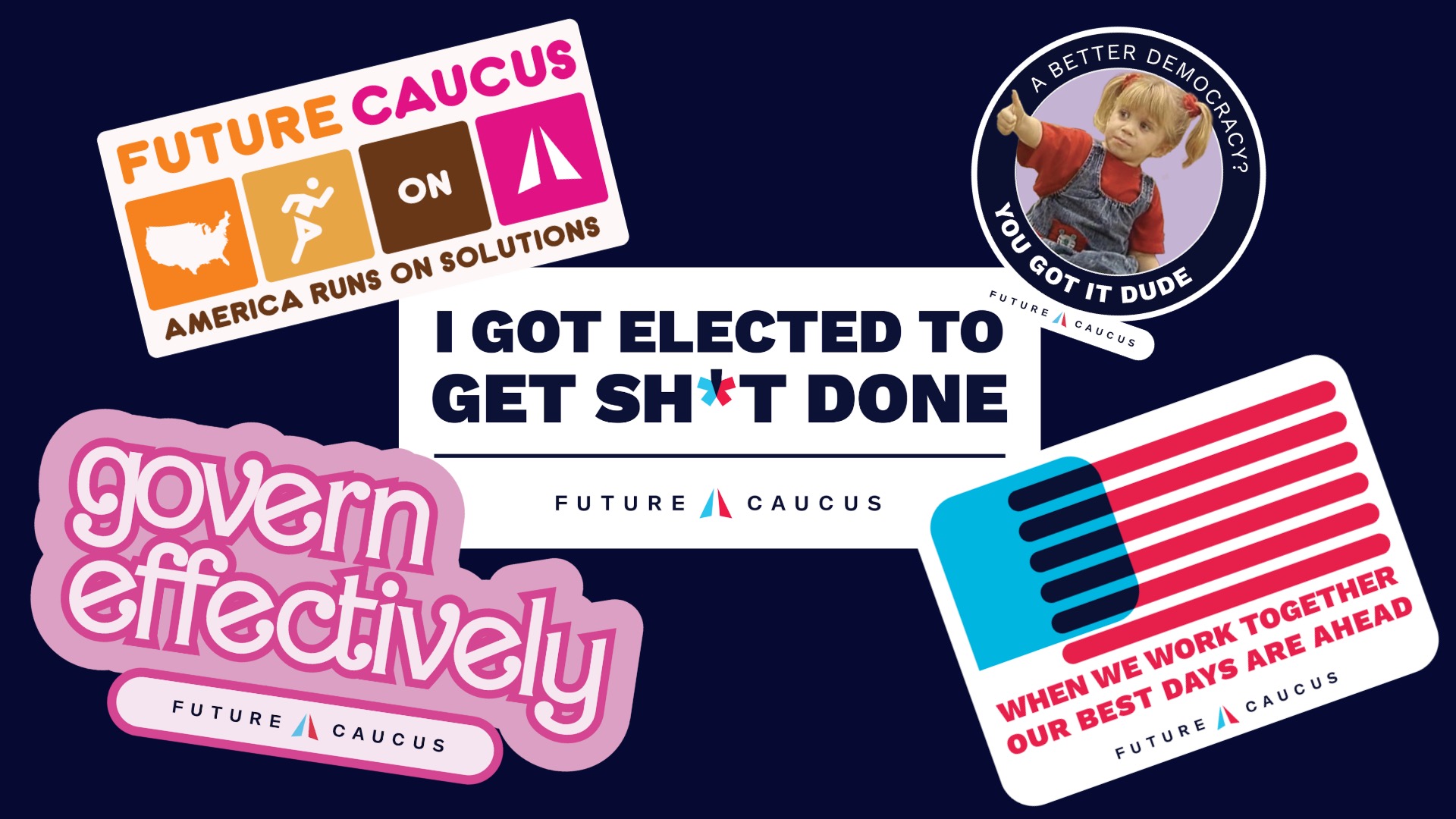
I Got Elected to Get Sh*t Done resonated instantly with lawmakers, to the point that we had to do multiple reprints. People put it on laptops, water bottles—anywhere it would be seen—because it reflects why many of them ran for office in the first place. We distilled it further into Govern Effectively, which also caught on quickly.
These stickers reinforce our ethos in a tangible, visible way, and more importantly, they give people a shared starting point. Once that anchor is in place, the community can explain your work in their own words—across perspectives, backgrounds, and motivations—while still landing in the same place.
You don’t need rigid talking points for consistency; you just need a clear, simple frame that everyone can make their own.
The Bottom Line
- Think long-term: A good story isn’t one-and-done. With creative and logistical planning, as well as good relationship management with your messengers, it can live across years and audiences.
- Systematize the work: Coding, cataloging, and intentional collection make storytelling achievable and replicable, even with small teams or in organizations with high turnover.
- Emphasize the human element: Stories rooted in vulnerability, lived experience, and collaboration don’t just resonate more deeply—they also stay relevant longer, making them adaptable across channels and moments.
Good storytelling isn’t magic. It’s the product of a system. Invest in that system, and stories will endure beyond their first use, driving action and advancing strategy.






Join 1,900+ BIPARTISAN LEADERS NATIONWIDE
Be a part of a network of lawmakers committed to governing effectively, passing more representative public policy, and increasing public trust in democracy.