ON THE RISE 2026
A biennial, election-year report, On the Rise analyzes a wide range of demographic data—including but not exclusive to generation, gender, and political-party affiliation—on candidates for Congress, with an emphasis on generational trends.
Since 2020, On the Rise has tracked the arrival of millennial—and since 2022, Gen Z—Americans to the national political stage. In 2022, one in six congressional candidates was a millennial. In 2024, one in four was a Gen Zer or millennial. In 2026, the figure is one in three. More than a third of the people who filed to run for Congress in this year’s cycle—36.7%—are under the age of 45. And for the first time in the history of this report, millennials are the largest generational cohort running for the US Senate.
By the NumbersGenerational Breakdown of Candidates
of candidates are Gen Zers
of candidates are millennials
of candidates are Gen Xers
of candidates are Baby Boomers
KEY FINDINGS
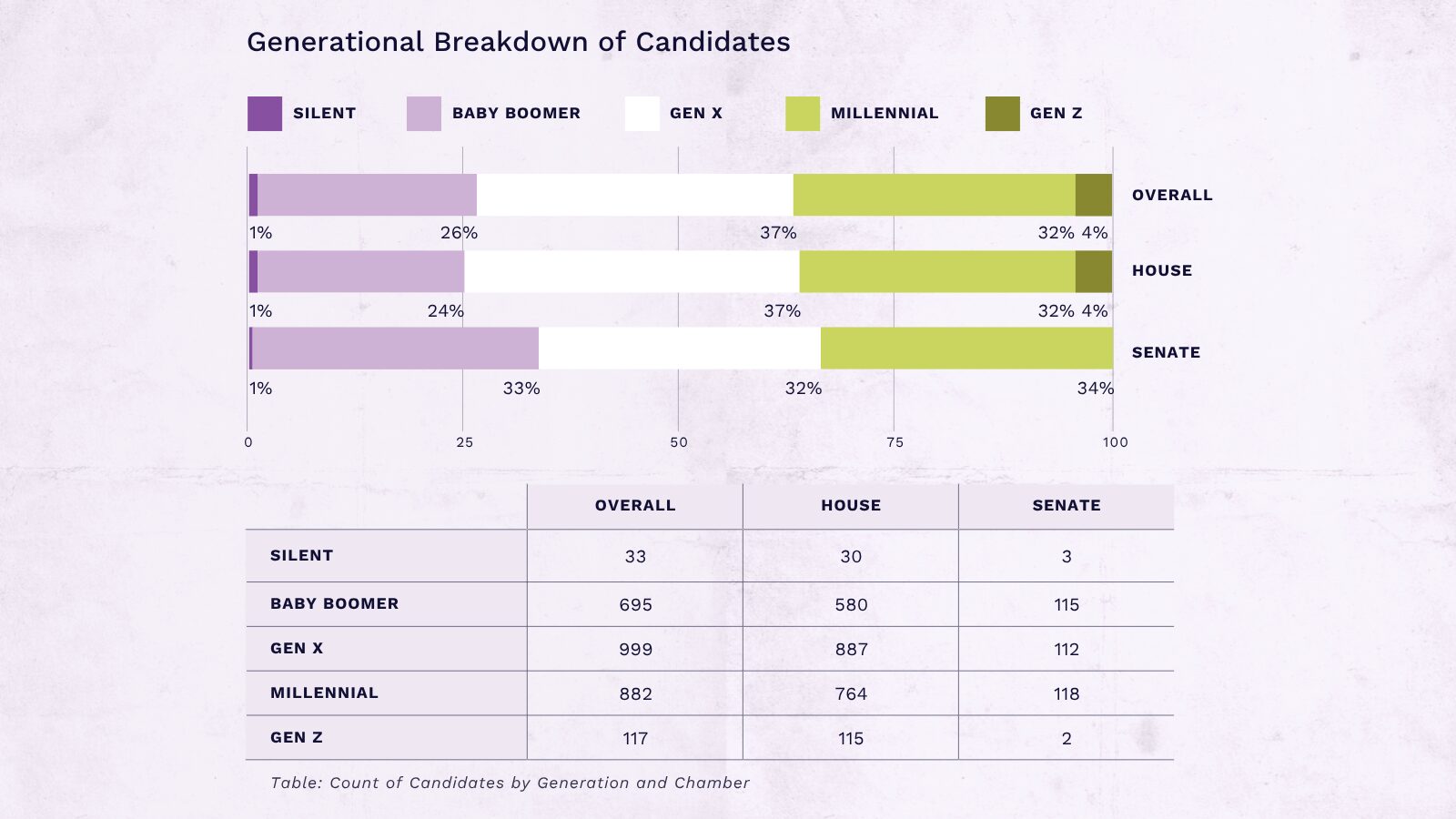
1 in 3 candidates for Congress are Gen Zers or millennials
In 2026, for the first time, Gen Zers and millennials made up more than a third of the congressional candidate pool, narrowing Gen X’s lead to less than half a percentage point. Millennials are also now the largest generational bloc running for the US Senate.
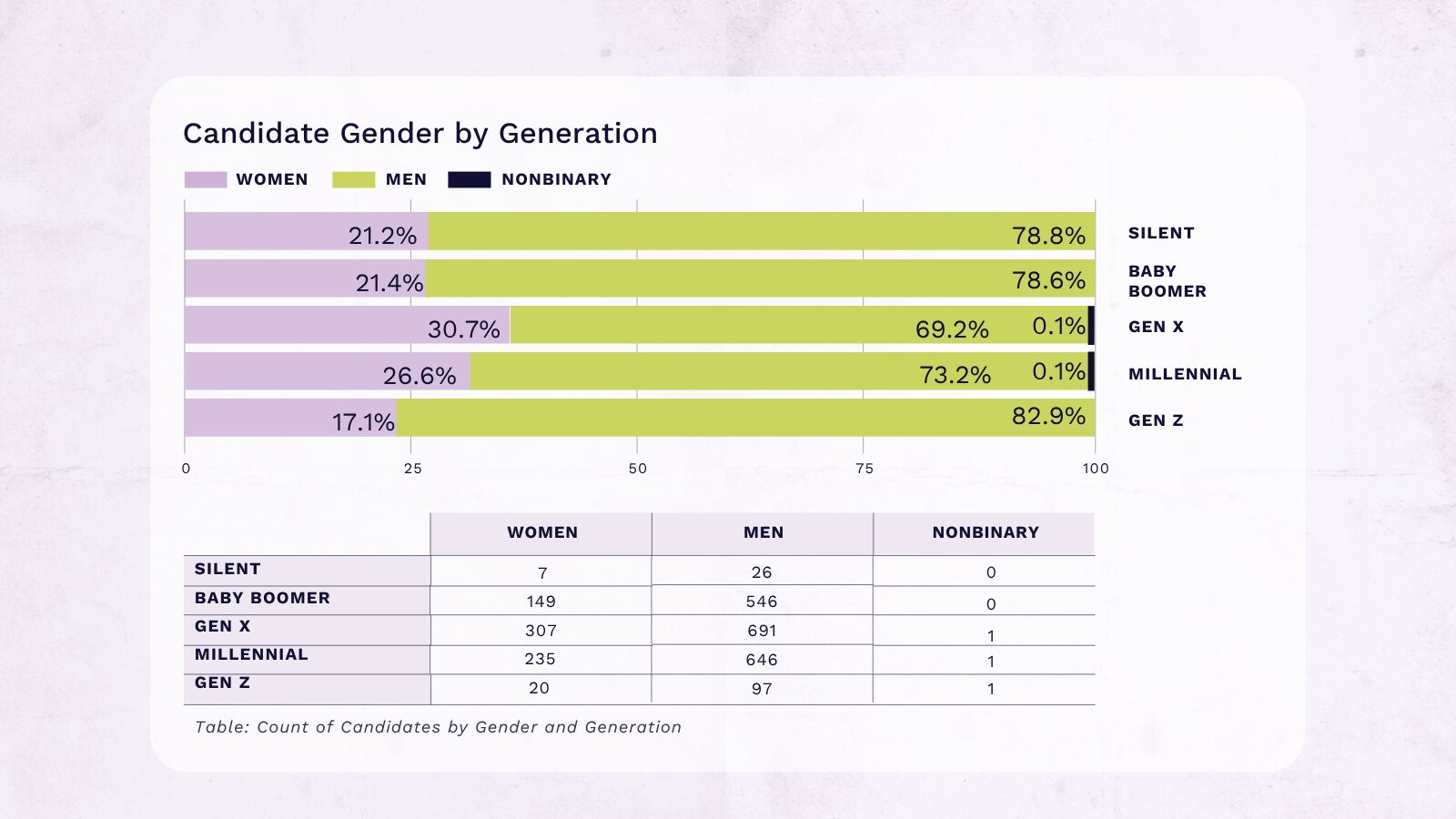
Men outnumber women by 3 to 1
The gap widens among younger candidates: More than four in five Gen Z candidates are men, the largest gender disparity of any generational cohort.
The gender gap in ballot qualification is small, but among Gen Z and millennial candidates, men drop out at notably higher rates than women.
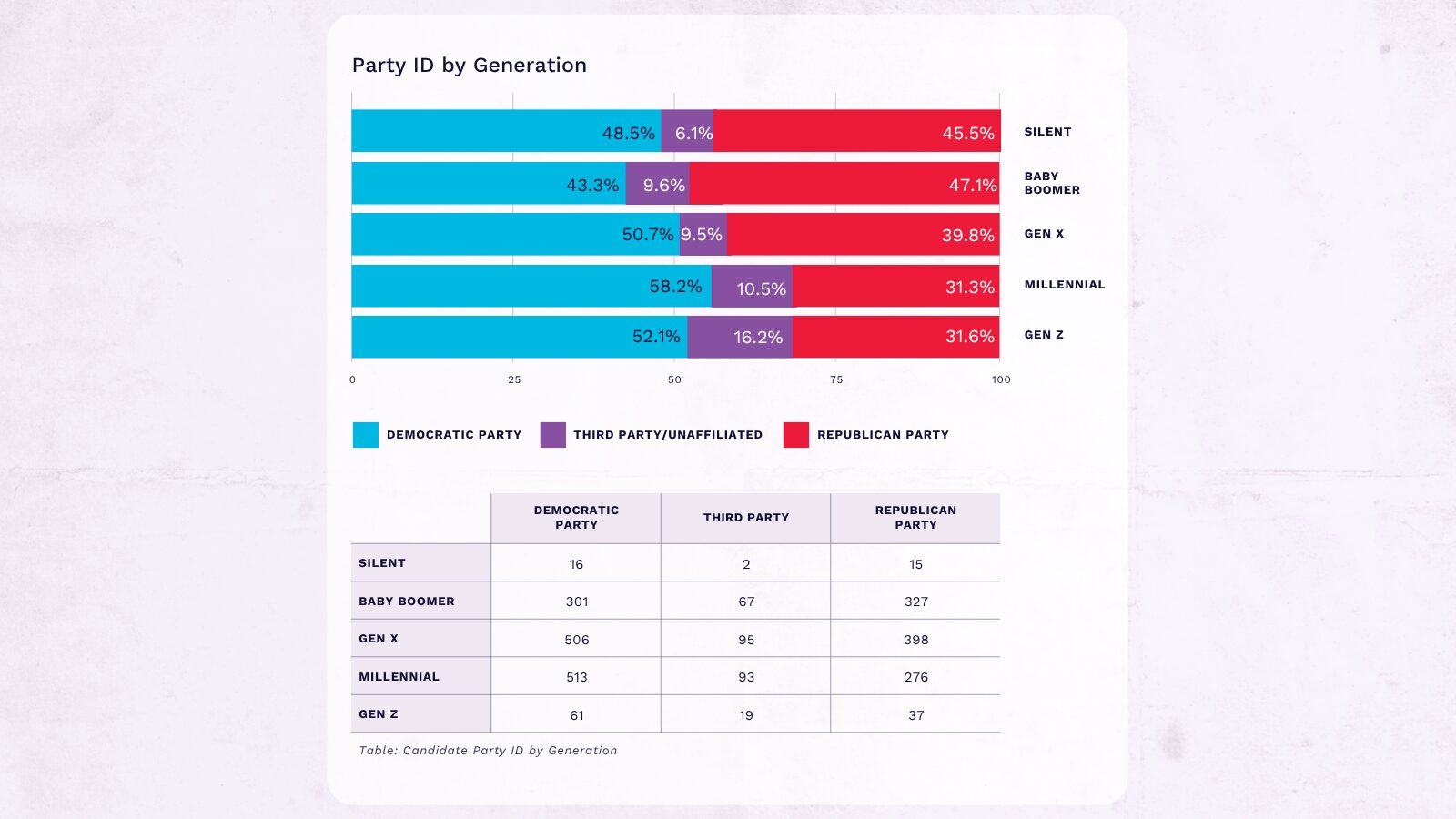
Gen Z candidates are the most likely to run outside the two major parties
One in six filed as third party or unaffiliated, most of them as independents. Millennials are the only generation running majority Democratic for the US Senate, a field in which Republicans lead every other cohort.
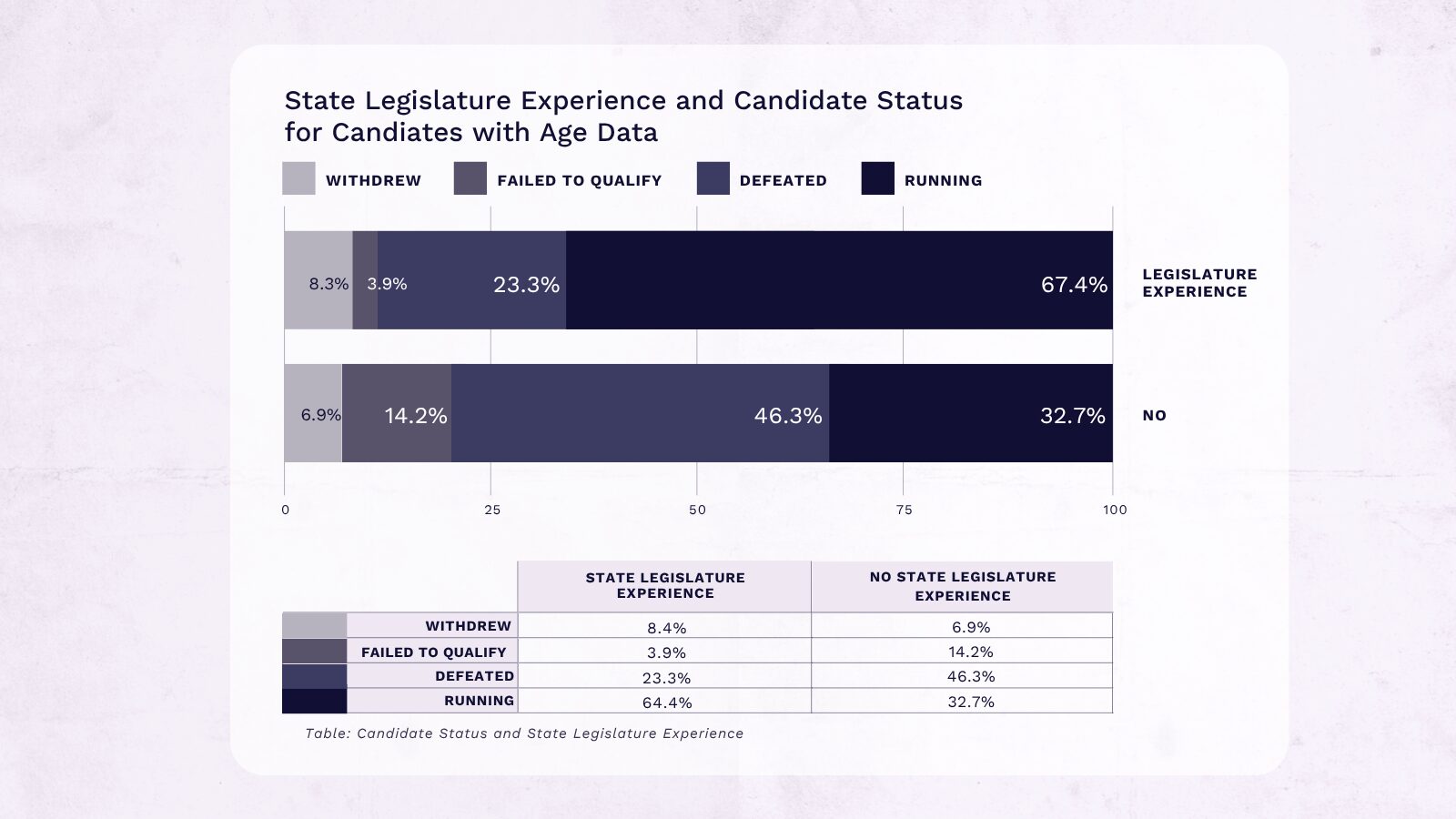
Candidates with state-level experience made it to the general election ballot at twice the rate of those without
Among current and former state legislators who are running for Congress, two in three reached the general election, compared with one in three of those who have not served at the state level.
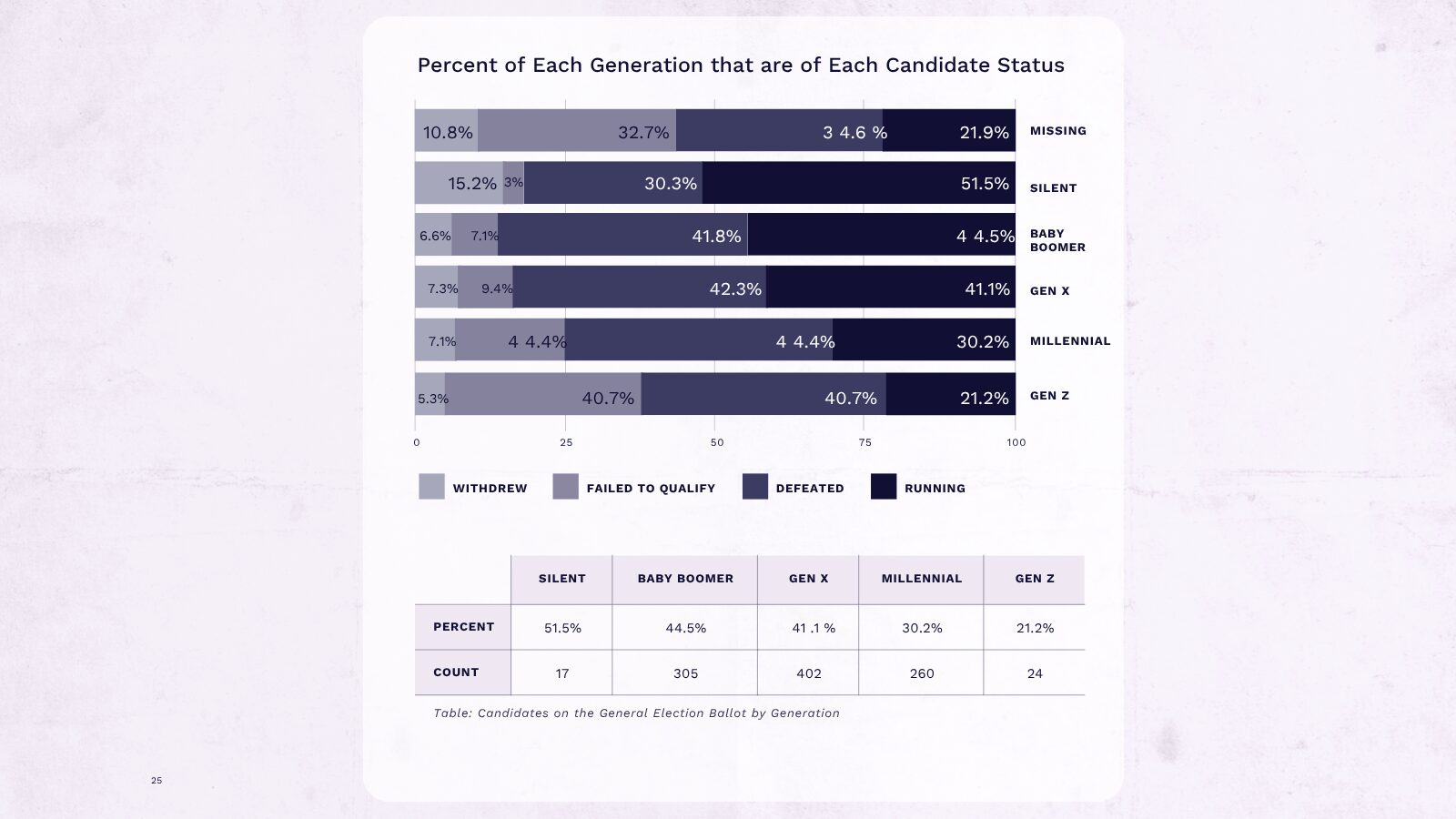
Younger candidates are less likely to remain on the ballot in November
Despite the trends supporting generational change, the field tends to narrow by generation over the course of the election cycle.
EXPLORE ON THE RISE 2026
MethodologyMethodology
Take a look at past editions of On the Rise






Join 2,000+ BIPARTISAN LEADERS NATIONWIDE
Be a part of a network of lawmakers committed to governing effectively, passing more representative public policy, and increasing public trust in democracy.