GEN Z AND MILLENNIAL LEADERS SHINE BRIGHT AT THE 2026 FUTURE CAUCUS RISING STAR AWARDS
November 19, 2026
By Harvey Solomon
With the U.S. Capitol looming outside its floor-to-ceiling windows, the venue’s lofty perch offered the perfect setting for the ninth annual Rising Star Awards. Yet coming so soon after such a dramatic election, was the timing perhaps a bit problematic?
“Asking Republicans and Democrats to get together for a party two weeks after an election, after this election, might be construed as a slightly unhinged thing to do,” admitted Layla Zaidane, president and CEO of Future Caucus. “But that’s essentially our business model. For many, election night represents a finish line. Races called, winners and losers, battlegrounds won or lost. If you’re in this room tonight, you know that it’s actually a starting line. Because at Future Caucus, we’re obsessed with what happens after Election Day, when the much harder work of governing begins anew.”
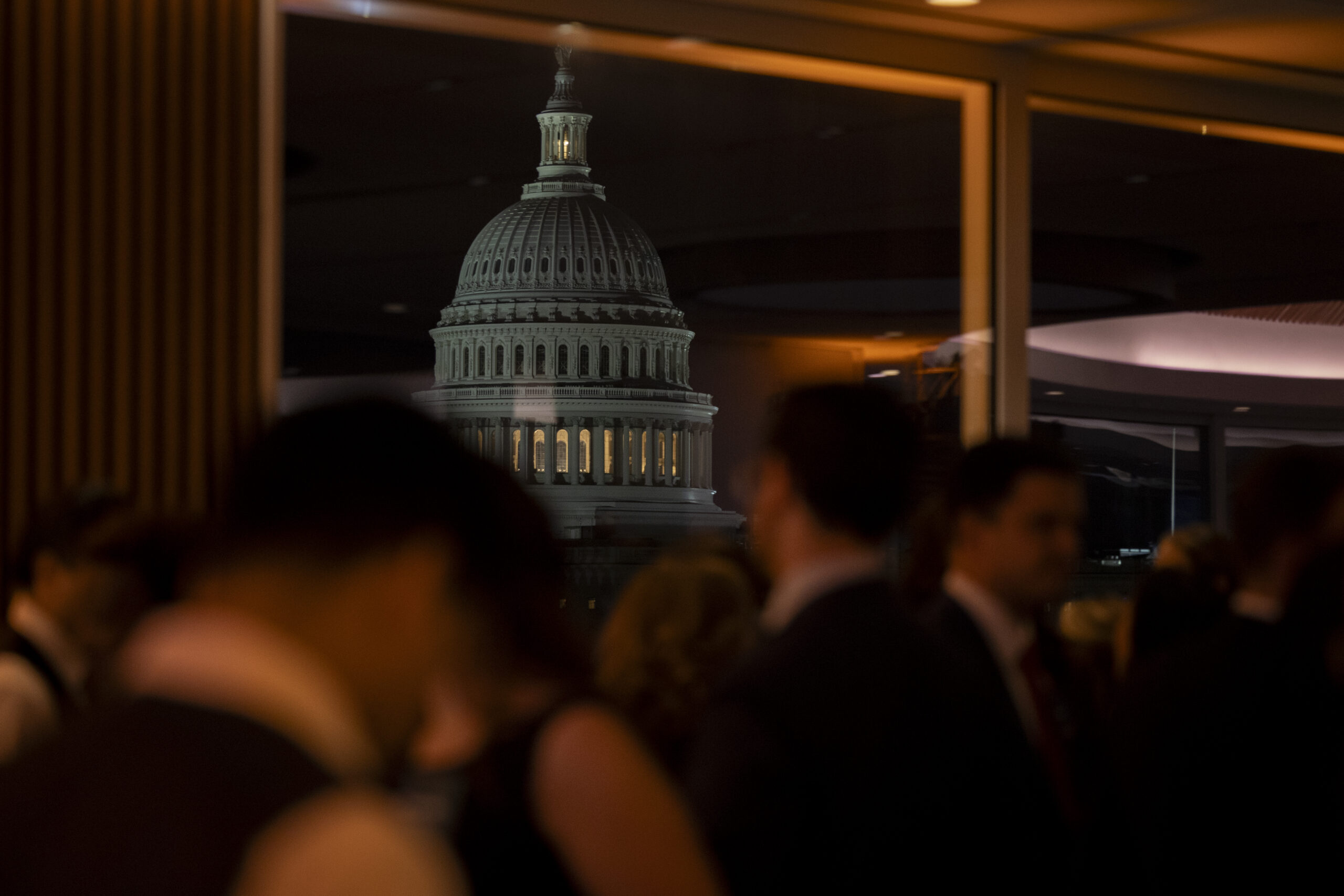
Besides the timing, attendees from more than 20 states were dealt a wild card in the form of a nationwide FAA ground stop that snarled air travel for days. Many intrepid travelers arrived with harrowing tales of delays and jury-rigged, multicity hops to make it in time for the collegial, celebratory event.
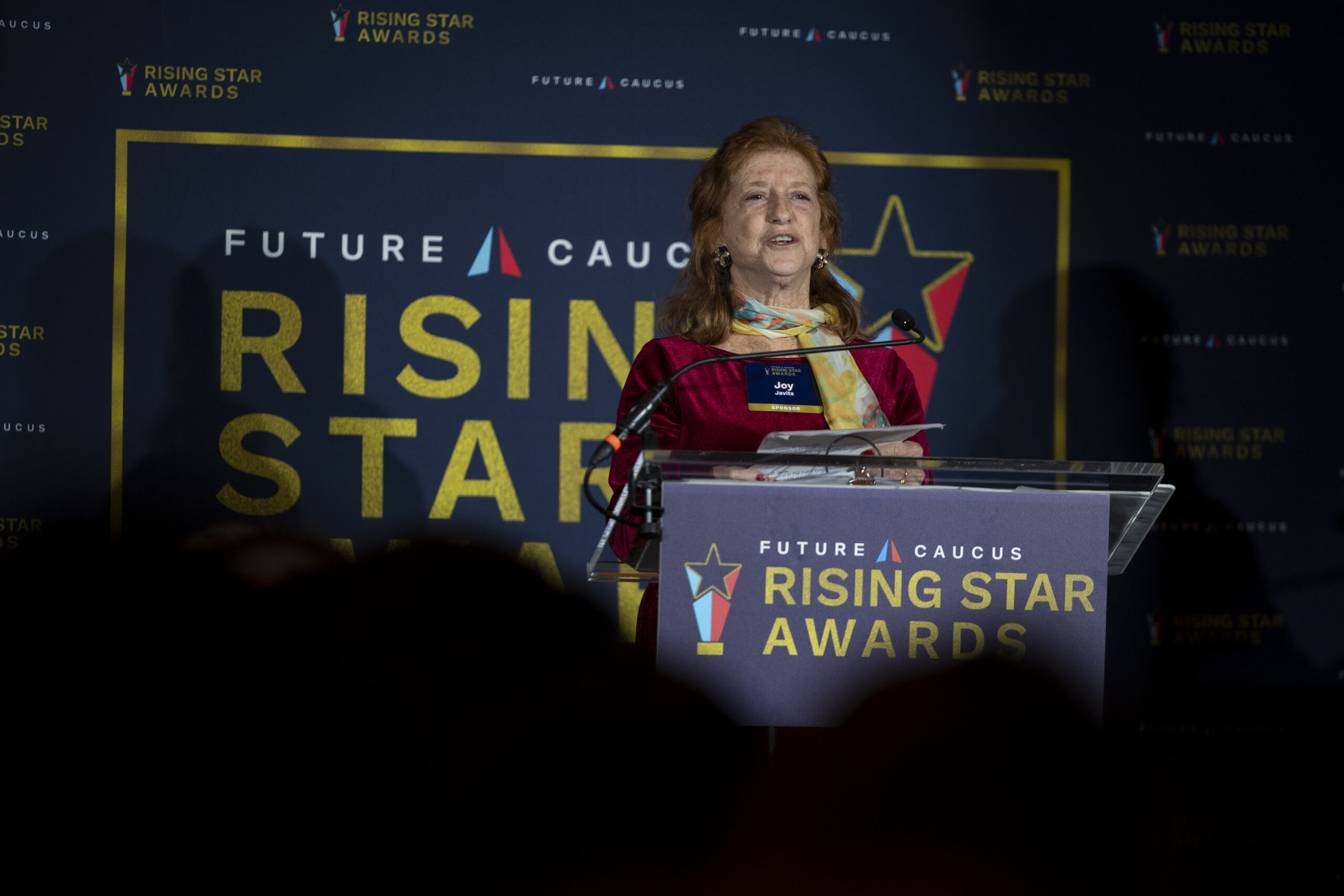
While the winds of change can’t be stopped, they can be harnessed to power bipartisan legislative success. Setting that tone early, Joy Javits, daughter of the late Sen. Jacob K. Javits, R-N.Y., introduced the Jacob K. Javits Prize for Bipartisan Leadership. “Fabulous Future Caucus,” Javits exulted to the crowded room. “This award calls attention to and celebrates public servants who cooperate across the partisan divide to advance the nation’s interest over narrow political expediency. Our father always called himself a public servant. He had little tolerance for those who just wanted to stifle and thwart the opposing party. He looked for the best ideas, whether they came from the left or the right, and worked tenaciously across party lines to fashion them into effective pieces of legislation.”
Throughout the night, speaker after speaker returned to that touchstone: that public service means bettering people’s lives, whoever they are and wherever they live. “Our generation doesn’t have to carry the political division that we’ve grown up watching,” said Rising Star awardee North Dakota state Rep. Dawson Holle, R-Mandan, who was elected at 18 in 2022 and became the state’s youngest-ever legislator. “We have a chance to do something differently. We can disagree without being disrespectful. We can stand up for what we believe in without tearing someone else down, and we can show people that public service is more than about just winning the next election.”
His fellow Rising Star winner, state Rep. Justis Gibbs, D-Jackson, the youngest African American member of the Mississippi Legislature, said he’d learned that lesson early. “My father, Judge Robert Gibbs, inspired me to enter public service,” Gibbs said. “He taught me that believing in a better community means accepting the responsibility to help build it. My mother, Judge Deborah Gibbs, was the hallmark example of true public service. She taught me that it’s not about a title. It’s about the trust people place in you and the lives that you touch.”

From South Dakota, state Rep. Kadyn Wittman, D-Sioux Falls, and state Sen. Brandon Wipf, R-Lake Byron, received the Cherisse Eatmon Collective Impact Award for their joint effort to improve young lives at the most elemental level: food. “When kids are better fed, we have higher test scores, higher rates of parent involvement and lower rates of truancy and mental illness,” said Wittman, whose bill stalled in committee three years running until she attracted the interest of a new colleague across the aisle. “Pound for pound, penny for penny, this is the single best ROI we can make in the future of American democracy.”
But the odds of passing the bill that’s now feeding 10,000 South Dakota students were extraordinarily steep. Describing their collective turnaround, Wipf spun a new twist on an old line. “House leadership support, Senate leadership support, executive branch support,” he said. “Zero out of three ain’t bad. But we brought people around, and that’s the job.”
Introducing the winners, South Dakota state Sen. Amber Hulse, R-Hot Springs, noted a pattern. “The Dakotas are on fire tonight,” she enthused. “We’re punching well above our weight.”

Wipf, a farmer like Holle, drew an analogy between agriculture and education. “Farmers don’t just plant seeds. We also invest in the soil ahead of time with fertilizer and planning. When you plant a seed, it finds purchase. South Dakota invests around $600 million a year in education. We think this bill is money well spent to ensure that kids aren’t distracted by thinking about their next meal, or worrying about what’s happening at home.”
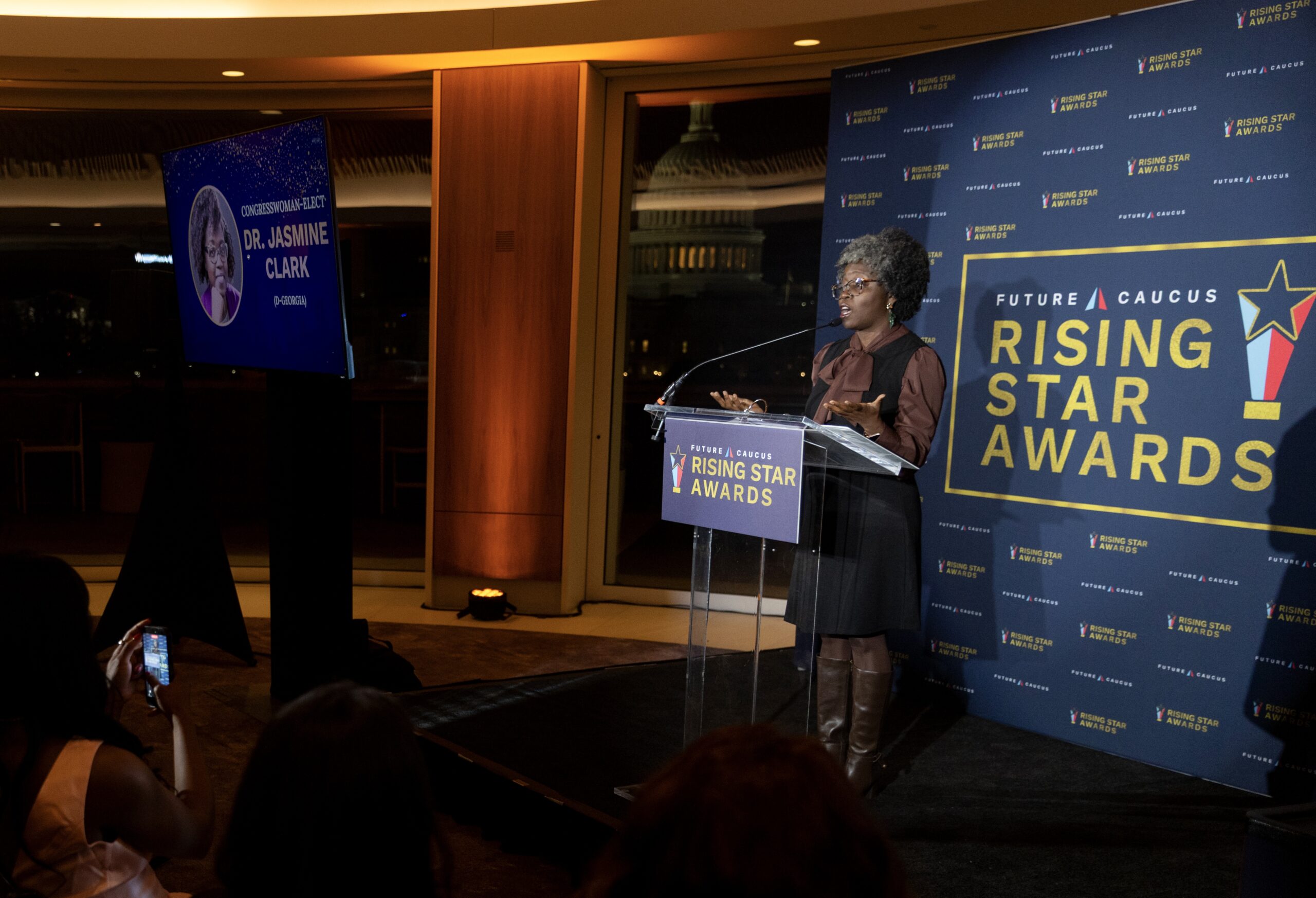
The night’s loudest and longest applause welcomed the keynote speaker, Rep.-elect Jasmine Clark, D-Ga., a founding co-chair of the Georgia Future Caucus. In a banner year for Gen Zers and millennials, at least 103 won their races on Nov. 3, including 49 who were newly elected and 54 who won reelection. Clark reminded the crowd of the many pressing issues ahead, including skyrocketing costs for food, fuel and other products, as well as jobs, wages, health care and benefits for younger voters working in the gig economy.
“Our communities are also asking us to address affordable housing,” Clark said, “and the ability for people, especially young people, to realize that American dream of homeownership. I actually bought my first home when I was 23 years old. Today, the average age of a first-time home buyer is 40 and over.” At this, a young attendee turned to his companion and muttered, sotto voce, “Don’t rub it in.” It wasn’t resentment but recognition, a heartfelt acknowledgment that more needs to be done, and soon.
While so much of the post-election conversation centers on Washington, D.C., the reality is that statehouses remain hotbeds for conceiving and enacting vital legislation, and housing remains a top priority, if a complicated one. “Pundits often say it’s about taxes and jobs,” said Massachusetts state Rep. David LeBoeuf, D-Worcester, a member of Future Caucus’ housing policy innovation fellowship who attended the event. “We have so much more to do together, to not just try to build ourselves out of the problem but create an inclusive environment in which housing becomes more accessible and affordable for renters and homeowners alike.”
Join 2,000+ BIPARTISAN LEADERS NATIONWIDE
Be a part of a network of lawmakers committed to governing effectively, passing more representative public policy, and increasing public trust in democracy.